An unexamined life is not worth living.

Tuesday, March 31, 2009

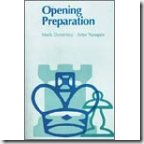
Book review: Opening Preparation by Mark Dvoretsky and Artur Yusupov

This book was written before computer databases became mainstream, but it has remained surprisingly relevant until now. It is based on the lectures done in Dvoretsky’s school in the early nineties, and covers different aspects of opening preparation:

  1. General principles of the opening – how to develop pieces, secure the king, etc, but described from the Grandmaster’s point of view for a somewhat advanced audience
  2. How to choose an opening repertoire – this is something every player has to do, and there is little written about it
  3. How to prepare for a specific tournament game. There is a balance between trying to memorize too much, and not knowing anything about your opponent, so Yusupov reveals his secrets
  4. How to study ideas behind a couple of specific opening setups – with less focus on memorization

As you can see, the tools you use – Fritz, Chessbase, etc. may have appeared, improved and changed dramatically since early nineties, but a chess player’s memorization capabilities, understanding of basic principles, tastes for certain structures  - they still follow the same laws and have the same limitations, so this book is still to be highly recommended for chess players rated 1700-2300.
image

Sunday, March 22, 2009

How to Use Chess Assistant on Vista or Windows 7 – Run as Administrator

After getting a Vista computer I installed my very old Chess Assistant 6 (birthday gift from year 2001). I was unable to run it, and assumed that it was just – too old. But then installing Chess Assistant Light, I was running into the same problem. Vista would just say – “cawin.exe has stopped working”, without giving any useful information.  Poking around I now got it to work – you have to run it as administrator:

image

The program then works fine on either Windows Vista or Windows 7. If you have tried Convekta’s products on Windows 8 – I would be interested to know if you have experienced any issues with them.

Saturday, March 21, 2009

10 steps to a Better Chess Opening Repertoire

  1. Write it down, and then print it out. Begin by recording what you know already, and build on that.
  2. Don’t be afraid that some parts of it are incomplete - realize that building an opening repertoire is a long term goal
  3. As Mark Dvoretsky explained in Opening Preparation – openings you play should:
    1. Fit your style (open vs. closed positions)
    2. Fit your memory’s abilities. Relatively speaking, some openings require understanding of plans (e.g. Closed Sicilian), while others, such as King’s Indian defence require remembering a lot of theory as well
  4. Don’t easily give up on lines that did not work out in a game, instead try to understand what particular mistake caused a defeat. That being said, if you keep having bad results in an opening – it’s worth reviewing whether it matches your style (see above).
  5. It’s may sound obvious, but review it against books like MCO or NCO, computer databases, etc.
  6. Pay attention to move orders and understand their implications. In “Slav Defence” Matthew Sadler talks about how this is often underestimated.
  7. Understand how your openings are connected to typical middlegames and endgames. Shereshevsky’s Mastering the Endgame is a great reference on the Opening->Endgame connection.
  8. Understand the opening’s history, and how ideas developed over time - see Kasparov’s “Revolution in the 70s”.
  9. Before an important tournament - review the variations you will mainly rely on in this event (assuming your repertoire allows some variety in the first place). If you know in advance your opponent in next round – spend an hour to prepare for that specific game. Both will save you time over the board.
  10. Review all games that you played in past, online and in over the board tournaments. Did you remember your own repertoire? Did the games reveal gaps in your coverage of theory?

Good luck! I am still working on step 1 for my own repertoire …

Sunday, March 15, 2009

Online tactics: double piece sacrifice

image

White to move. DDT3000-KMehmedov, 3 minutes per game

I already sacrificed a piece for two pawns, and now need to keep the attack going. I came up with a second sacrifice, and the engine confirms that this is the best move:

17. Bh6! I noticed that I get to win the knight on d7, and just could not resist playing this.

image

The game continued:

17. … Bf6 (17... Kxh6 18. Qg6#) 18.Nxd7 Kxh6 19. Nxf6 (19. g4 !! +-) 19... gxf6 20. Qxb7
Qd6 21. Qf7 Re4 22. Rac1 Rae8 23. Rxe4 Rxe4 24. g3 Re7 25. Qf8+ Kg6 26. Qg8+
Rg7 27. Qe8+ Kh7 28. Qh5+ {Black resigns} 1-0

Opening repertoire – Write it Down!

In Jonathan Tisdall’s excellent book “Improve Your Chess Now” I came across a very practical recommendation that unfortunately took me so long to arrive at myself (or at least to follow with any consistency). The Wisdom and Advice chapter has a subsection called “Write it down” and I’ll quote it directly here:

If you have an interesting idea, write it down. If you analyse a position, write it down. If you decide on a basic opening repertoire, write it down. Recording your thoughts makes it easier to remember, and give you something to refer to when you eventually forget them. I find a often lose the notebook but it doesn’t hurt to try. And paper is still a more secure format than diskette, so I suppose the up-to-date advice would be: print it out [ and back it up – editor’s note.]

write it down

Many times I found myself over the board unsuccessfully trying to remember the theory, or trying to decide how to uniquely deviate from the same main lines that I never had a chance to study. These are the symptoms of the same root problems that I think affect many amateur players:

  • A player never decides on a repertoire choice against a specific opening (even though it comes up once in every 30 blitz games and is an obvious problem)
  • When a older game reveals a problem in one's knowledge of an opening, or in the opening itself, no action is taken between tournaments to "fix it" (because the steps involved are undefined).
  • Because nothing is ever written down in one place, it is time consuming to review old theory knowledge before a tournament, or before a specific game.


Writing it down (i.e. enter into the computer, using today's language) is not going to solve all these problems, but it is the first step in the right direction. It will reveal what are the biggest gaps in your repertoire, and will be something you can always iterate upon and expand over the years. And yes, back it up!

PS. A while ago I already wrote about the attitude one should have towards opening preparation. And just last week I made a post about software tools to do exactly what Tisdall is talking about – printing out your opening repertoire.

Saturday, March 14, 2009

Online tactics: a typical sacrifice I missed

image

DDT3000-Chanchar, 2009, White to move

White won the exchange in a typical IQP/hanging pawns structure, but Black has broken through on the queenside by just capturing on c3.

I played 21. Nxf7 and later failed to win the game. But another typical sacrifice (which I did not have time to calculate) was much stronger.

21. Bxe6!! was winning. If black takes on e6, he loses the f6 knight and is under attack. If Black takes on h3, White takes on f7 with check, and then recaptures the queen, remaining up an exchange and a pawn. There was not all that much to calculate, but I missed this chance in my 3 0 ICC game.

Wednesday, March 11, 2009

Video: Attack With Opposite Coloured Bishops

Since youtube does not allow videos longer than 10 minutes, I uploaded my longer video to chessvideos.tv. image

At the time I was quite proud of this game, and now while preparing the video it was interesting to analyse it in a few more details. I recorded this video during the Christmas break, just as the one about seeing the entire board and another one about opposite coloured bishops. If you ever read Mark Dvoretsky's book “Positional Play”, you start to look at opposite coloured bishops as a theme, so maybe that's why I already have two videos on that subject.

Hit Counter