Chess on Linux, well, is possible. Since my windows installation went down last week, I've been experimenting with running different chess (and other) software on Ubuntu 7.10 and learning whether migrating to Linux is really as painful as people say. A few discoveries:
- Wine does miracles. Both Chessbase Light 6.0 and Chessbase Light 2007 run in Wine (the 2007 version must be installed via Wine, the ancient 6.0 version can run from a windows partition)
- Blitzin does work from Wine, but moves get input with a bit of delay (very fast UI is the main benefit of Blitzin)
- Jin is nice, but I lost a 3 minute game on time, and I want to blame it on the 0.5 delay that the UI has for displaying the moves - you hear the sound of opponent's move first, and only later see the actual move on the board. Note that I had tried the web based version of Jin before on Windows, and it worked perfectly.
- There are a lot of tools that are still missing and that I have not tried to find an alternative for yet, like Palview, Windows media recorder, and Windows live writer - I pretty much relied fully on them for making blog entries and videos for my youtube channel.
All in all, the amount of free software on Ubuntu, and decent interoperability with windows programs really put me on the fence as to whether or not to go back to windows full time for my home computing needs.
Sunday, January 25, 2009

Tuesday, January 20, 2009
Corus 2009 is in progress
One of the major chess tournaments of the year is now in progress, and as usual you can follow the games online (with your engine running the background) and see annotations rapidly appearing on different websites and so on. I'd like to emphasize one amazing resource though - youtube press conference videos from last year's event. Carlsen, Anand and Topalov go over their games, show what they saw and what they missed during the game. It feels like you are almost present there and want to help them pick up the magnetic pieces that those super-GMs keep dropping on the floor. I really hope they put up this year's post-mortems on youtube the same way!!
Sunday, January 4, 2009
Attacking Chess - seeing the entire board
Jiganchine - Trotchanovich, Fraser Valley Championship, 2008.

White to move.
How can White bring his bishop and knight effectively into the game?
Again, a video is worth a thousand pictures:
Attacking Chess - opposite coloured bishops (video)
If you have read a few of Mark Dvoretsky's books (like I have), you'd know that opposite coloured bishops are his specialty both in the middlegame and in the endgame. Positional Play volume has a special chapter about importance of middlegame initiative whenever you have bishops of opposite colours.
Here is a simple position that could have also illustrated his ideas fairly well:
Jiganchine -Trotchanovich, Keres memorial, 2007

White to move.
For a detailed explanation and solution - watch this video I made:
Tuesday, December 16, 2008
Database files for chess books
Having recently flipped through all 7 of Kasparov's recent books (5 volumes of My Great Predecessors, Revolution in the 70s and the latest Kasparov-Karpov 1975- 1985), I want to have the games in a computer database. What a common nerdy desire! Books are great for calmly re-playing through the moves, but what if I want to add a variation refuting Kasparov's analysis (notes on the margin?), or reference a game from the book in my own analyzed game? I also want to have a collection of games that are useful for understanding the middlegames arising from the openings that I play, and Kasparov's books are good for learning about historic development of plans and ideas (but only some games are relevant to my repertoire).
Seems like I already paid for the contents of the books, I would not be violating anything by having them on my computer (especially - if they are without annotations). A while back gambitchess.com started a great collection of database files for published books, but they don't have Kasparov's books. Yet looking around the Internet, I can only find 2nd and 4th volume of My Great Predecessors in pgn/chessbase formats. Chessgames.com has the collections of games that I need, but I can't download them in one shot without becoming a paid member. Seems like I might just have to download them one by one ...

Monday, December 8, 2008
Tactics - crazy computer move
Noam Davies - Jiganchine, 2005 (analysis) - White to move

The black queen captured the rook on a1, and risks getting trapped. But right now it seems that White has to re-capture on f3 - does not he? And Black is also up two pawns...
17. Rd1!!? - this is the MOST CRAZY MOVE THAT ONLY COMPUTER CAN SUGGEST - but it forces perpetual check by destracting Bf3 from d5. The idea behind moving the rook to d1 is to prevent the Black queen from escaping via d4.(17. Kxf3 Qd4)
17... Bxd1 18. Qxc6+ Kd8 19. Qxd5+ with a draw by perpetual check

Saturday, December 6, 2008
Opening preparation - therapeutic?
A couple of years ago I was playing in an annual BC-Washington chess match. My game has gone into a long and tiring endgame, but as I was walking around, waiting for my opponent to move, I overheard US master Marcel Milat analyzing his game against Alfred Pechisker. Marcel won as Black, after gaining a nice position out of the opening. He uttered one phrase that stuck to my mind: "I find studying theory to be therapeutic." I thought to myself. "Holy Crap, how does he do that, why do I always have a hard time learning opening theory, deciding on which line to pick for my repertoire, and even worse - during the game desperately trying to remember which move to play on move 10, while my master opponent is walking around, wondering what the heck I am thinking about."

The word "therapeutic" however stuck to my mind; I was wondering how to be like Marcel and calmly study opening theory, the same way I analyze my games and endgames (which I actually do find relaxing and pleasant). Marcel was well-known for great opening preparation when he lived in BC, so I realized that proper attitude is key to success. Several problems seem to have plagued my opening preparation in the last few years (aggravated by rarely playing in regular chess tournaments):
1) Getting tired of old openings after a disappointing game put doubt on a certain line (a crushing quick defeat or unpleasant pawn structure that drags on until endgame)
2) As a solution - trying to switch to new openings, but not having enough practice to learn them, having similar problems (or even worse) in the new openings. This is a known syndrome (giving up on old lines too easily), that leads to 'jumping', but it is sometimes hard to distinguish from just wanting to learn new middlegame structures.
3) In openings that I rarely encountered - not even having any line prepared at all ("so what do I play here on move 7")
Somewhere around summer of this year, I realized that I if I want to take my chess openings a bit more seriously, I need to change my approach, which now consists of several points:
1) To NOT study new openings in replacement of what I already have.
2) To review and organize (in a database) all the lines that I have ever played - making my repertoire more formalized and concrete, so that over the board I don't have to decide between 3 lines that I have played before. Part of my problem was that I forgot the stuff I actually did kind of know 5-10 years ago, so it was definitely useful to review those old lines. Another source of frustration was having database files scattered all over my hard drive, in different database formats (some in Chessbase, some in Chess Assistant), making it really hard to figure out where to add new lines, or update existing ones. That had to be fixed for sure. Somewhere (in a database, on paper, etc) - there must be a tree of moves that constitute my response to every possible move, in a style to similar to Nunn's Chess Openings.
3) Fill the gaps I have in my repertoire (identify them first, and gradually - prepare some lines in response to openings I never played...)
4) To plan my other study (practice games on ICC or book reading, etc) around that formalized repertoire.
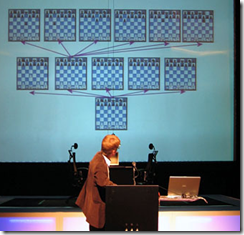
Thinking about it again - with a more conservative approach, I see how studying openings can be "therapeutic", since I would have a goal that I can gradually move forward to - a manageable opening repertoire that fits into my memory, but also fits my style. As Alex Yermolinsky said in "The Road to Chess Improvement", "Man gotta know his limitations", and definitely with playing 10 tournament games a year, it's hard to master King's Indian, Sveshnikov Sicilian, and Marshall attack from scratch all at once, so you have to make some choices; or else the number of possibilities one has to remember on every move can easily get out of control ...

The word "therapeutic" however stuck to my mind; I was wondering how to be like Marcel and calmly study opening theory, the same way I analyze my games and endgames (which I actually do find relaxing and pleasant). Marcel was well-known for great opening preparation when he lived in BC, so I realized that proper attitude is key to success. Several problems seem to have plagued my opening preparation in the last few years (aggravated by rarely playing in regular chess tournaments):
1) Getting tired of old openings after a disappointing game put doubt on a certain line (a crushing quick defeat or unpleasant pawn structure that drags on until endgame)
2) As a solution - trying to switch to new openings, but not having enough practice to learn them, having similar problems (or even worse) in the new openings. This is a known syndrome (giving up on old lines too easily), that leads to 'jumping', but it is sometimes hard to distinguish from just wanting to learn new middlegame structures.
3) In openings that I rarely encountered - not even having any line prepared at all ("so what do I play here on move 7")
Somewhere around summer of this year, I realized that I if I want to take my chess openings a bit more seriously, I need to change my approach, which now consists of several points:
1) To NOT study new openings in replacement of what I already have.
2) To review and organize (in a database) all the lines that I have ever played - making my repertoire more formalized and concrete, so that over the board I don't have to decide between 3 lines that I have played before. Part of my problem was that I forgot the stuff I actually did kind of know 5-10 years ago, so it was definitely useful to review those old lines. Another source of frustration was having database files scattered all over my hard drive, in different database formats (some in Chessbase, some in Chess Assistant), making it really hard to figure out where to add new lines, or update existing ones. That had to be fixed for sure. Somewhere (in a database, on paper, etc) - there must be a tree of moves that constitute my response to every possible move, in a style to similar to Nunn's Chess Openings.
3) Fill the gaps I have in my repertoire (identify them first, and gradually - prepare some lines in response to openings I never played...)
4) To plan my other study (practice games on ICC or book reading, etc) around that formalized repertoire.
Thinking about it again - with a more conservative approach, I see how studying openings can be "therapeutic", since I would have a goal that I can gradually move forward to - a manageable opening repertoire that fits into my memory, but also fits my style. As Alex Yermolinsky said in "The Road to Chess Improvement", "Man gotta know his limitations", and definitely with playing 10 tournament games a year, it's hard to master King's Indian, Sveshnikov Sicilian, and Marshall attack from scratch all at once, so you have to make some choices; or else the number of possibilities one has to remember on every move can easily get out of control ...

Subscribe to:
Posts (Atom)


 Posts
Posts

