I picked up the “The Road to Chess Improvement” once again and was struck by a thought that this book’s title may be interpreted as the reader’s road to improvement. That may lead to disappointment as the book does not present the reader with a structured plan of what to do in order to improve their chess. What it actually is is author’s road to improvement. The author documents all the ups and down that he had as a chess player. Those include experiments with different openings and different strategic ideas, as well as playing styles. For example in the beginning of his chess career he did not played many gambits mostly preferring closed openings. That led to his playing style being somewhat limited. Expanding his opening repertoire later on with the openings that involve sacrifices added to his practical strength. It is up to the readers to judge how this applies to their chess path. As for myself, I feel more motivated to look at my own games, realizing that I had spent very little time actually analysing them.
Showing posts with label Yermolinsky. Show all posts
Showing posts with label Yermolinsky. Show all posts
Tuesday, July 31, 2012

Saturday, December 6, 2008
Opening preparation - therapeutic?
A couple of years ago I was playing in an annual BC-Washington chess match. My game has gone into a long and tiring endgame, but as I was walking around, waiting for my opponent to move, I overheard US master Marcel Milat analyzing his game against Alfred Pechisker. Marcel won as Black, after gaining a nice position out of the opening. He uttered one phrase that stuck to my mind: "I find studying theory to be therapeutic." I thought to myself. "Holy Crap, how does he do that, why do I always have a hard time learning opening theory, deciding on which line to pick for my repertoire, and even worse - during the game desperately trying to remember which move to play on move 10, while my master opponent is walking around, wondering what the heck I am thinking about."

The word "therapeutic" however stuck to my mind; I was wondering how to be like Marcel and calmly study opening theory, the same way I analyze my games and endgames (which I actually do find relaxing and pleasant). Marcel was well-known for great opening preparation when he lived in BC, so I realized that proper attitude is key to success. Several problems seem to have plagued my opening preparation in the last few years (aggravated by rarely playing in regular chess tournaments):
1) Getting tired of old openings after a disappointing game put doubt on a certain line (a crushing quick defeat or unpleasant pawn structure that drags on until endgame)
2) As a solution - trying to switch to new openings, but not having enough practice to learn them, having similar problems (or even worse) in the new openings. This is a known syndrome (giving up on old lines too easily), that leads to 'jumping', but it is sometimes hard to distinguish from just wanting to learn new middlegame structures.
3) In openings that I rarely encountered - not even having any line prepared at all ("so what do I play here on move 7")
Somewhere around summer of this year, I realized that I if I want to take my chess openings a bit more seriously, I need to change my approach, which now consists of several points:
1) To NOT study new openings in replacement of what I already have.
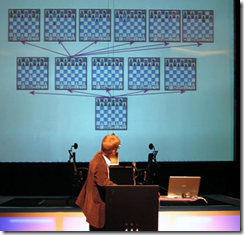
2) To review and organize (in a database) all the lines that I have ever played - making my repertoire more formalized and concrete, so that over the board I don't have to decide between 3 lines that I have played before. Part of my problem was that I forgot the stuff I actually did kind of know 5-10 years ago, so it was definitely useful to review those old lines. Another source of frustration was having database files scattered all over my hard drive, in different database formats (some in Chessbase, some in Chess Assistant), making it really hard to figure out where to add new lines, or update existing ones. That had to be fixed for sure. Somewhere (in a database, on paper, etc) - there must be a tree of moves that constitute my response to every possible move, in a style to similar to Nunn's Chess Openings.
3) Fill the gaps I have in my repertoire (identify them first, and gradually - prepare some lines in response to openings I never played...)
4) To plan my other study (practice games on ICC or book reading, etc) around that formalized repertoire.
Thinking about it again - with a more conservative approach, I see how studying openings can be "therapeutic", since I would have a goal that I can gradually move forward to - a manageable opening repertoire that fits into my memory, but also fits my style. As Alex Yermolinsky said in "The Road to Chess Improvement", "Man gotta know his limitations", and definitely with playing 10 tournament games a year, it's hard to master King's Indian, Sveshnikov Sicilian, and Marshall attack from scratch all at once, so you have to make some choices; or else the number of possibilities one has to remember on every move can easily get out of control ...

The word "therapeutic" however stuck to my mind; I was wondering how to be like Marcel and calmly study opening theory, the same way I analyze my games and endgames (which I actually do find relaxing and pleasant). Marcel was well-known for great opening preparation when he lived in BC, so I realized that proper attitude is key to success. Several problems seem to have plagued my opening preparation in the last few years (aggravated by rarely playing in regular chess tournaments):
1) Getting tired of old openings after a disappointing game put doubt on a certain line (a crushing quick defeat or unpleasant pawn structure that drags on until endgame)
2) As a solution - trying to switch to new openings, but not having enough practice to learn them, having similar problems (or even worse) in the new openings. This is a known syndrome (giving up on old lines too easily), that leads to 'jumping', but it is sometimes hard to distinguish from just wanting to learn new middlegame structures.
3) In openings that I rarely encountered - not even having any line prepared at all ("so what do I play here on move 7")
Somewhere around summer of this year, I realized that I if I want to take my chess openings a bit more seriously, I need to change my approach, which now consists of several points:
1) To NOT study new openings in replacement of what I already have.
2) To review and organize (in a database) all the lines that I have ever played - making my repertoire more formalized and concrete, so that over the board I don't have to decide between 3 lines that I have played before. Part of my problem was that I forgot the stuff I actually did kind of know 5-10 years ago, so it was definitely useful to review those old lines. Another source of frustration was having database files scattered all over my hard drive, in different database formats (some in Chessbase, some in Chess Assistant), making it really hard to figure out where to add new lines, or update existing ones. That had to be fixed for sure. Somewhere (in a database, on paper, etc) - there must be a tree of moves that constitute my response to every possible move, in a style to similar to Nunn's Chess Openings.
3) Fill the gaps I have in my repertoire (identify them first, and gradually - prepare some lines in response to openings I never played...)
4) To plan my other study (practice games on ICC or book reading, etc) around that formalized repertoire.
Thinking about it again - with a more conservative approach, I see how studying openings can be "therapeutic", since I would have a goal that I can gradually move forward to - a manageable opening repertoire that fits into my memory, but also fits my style. As Alex Yermolinsky said in "The Road to Chess Improvement", "Man gotta know his limitations", and definitely with playing 10 tournament games a year, it's hard to master King's Indian, Sveshnikov Sicilian, and Marshall attack from scratch all at once, so you have to make some choices; or else the number of possibilities one has to remember on every move can easily get out of control ...

Monday, November 12, 2007
The Road to Chess Improvement - old review
I wrote this book review about 7 years ago, when I was studying chess very intensely, and I could afford to go through nearly every game in a book. A lot of books have come out since then, but I have not seen too many that focus so much on psychological aspects of tournament chess.
My first book review:"The Road to Chess Improvement" by Alex Yermolinsky Once I was looking at the books in the chess club and discussing with an experienced player, which book would be better for me to buy: Yermo's one or Secrets of Modern Chess Strategy by John Watson. The advice was to get Watson's book, which is what I did.
I did not regret buying it. However, my curiosity for Yermolinsky's work was not exhausted and soon I was holding it in my hands too. To be honest, this is probably the most exciting book I have seen so far. While my excitement about it maybe not the same when I will look at it in a year, but the first impression is very important too.
1) Content All the issues that the author raised are the ones that each chessplayer in his development has to deal with sooner or later. Why do we lose games? Why it is hard to defend difficult positions? And the opposite: why is it also difficult to win won positions? We often think, well, I failed to win this sharp middlegame, I could have got a winning attack, but somehow missed it. The book tells you why such things happen!
2) Structure The book is separated into 3 major parts:
Trends, Turning Points and Emotional Shifts Here the author talks about how the advantage shifts from one side to another, how decisions are made, why we tend to make more mistakes in one type of positions and not in another. His ideas seemed to be rather original and correct to me. For example, Yermolinsky says that he enjoys to have a structural advantage, rather than a dynamic one; it is easier for him to play the positions when he pawns are stronger than his opponent's. However, he does not like very much to have a temporary initiative that can easily evaporate. What he really suggests is for each player to decide for himself, what type of player he is, and use this knowledge when studying chess and playing games. Useful tip!
Openings and Early Middlegame Structures Throughout the book Yermolinsky very often discusses the concept of the so called Soviet Chess School. At some point he cleverly notices that "There was no building bearing such a sign' The Soviet School of Chess'." I could elaborate a bit more on why Yermolinsky was not a big fan of his coaches, but this is not really the point here. What seems to be important to me is that the approach that the author is using in his book is based on the methods of Soviet chessplayers. If I was to summarize what the 'Soviet Chess School' is mainly about, I would probably come up with the following concept:
A very clear understanding of what middlegame structures are going to arise from a certain opening and a deep connection between all three parts of the game. In other words, if someone plays the French, he should know very well how he can be killed by an attack with a standard Bxh7+ sacrifice, as well as how difficult Tarrasch - Teikhman type of endgame can be for him.
This is exactly what Yermo is dealing with in the second part of his book. He takes 7 different typical middlegame positions and analyses motives that are common for each. When reading this section, the reader can also get a very good idea of how a grandmaster's repertoire develops, which is in my view a very important advantage of this book: a real life perspective on studying chess is provided.
Tactical Mastery and Strategic Skills This part is also very interesting. In my perspective, the author's major point of view is that it is impossible to see tactics and strategy as separate elements in chess. Those who pretend that they can win pure strategic games are simply distorting the truth. Yermolinsky shows that moves that are strategically "inferior", actually are not so bad, but often the player later, after having committed himself to some weakness, does not find the most precise continuation in the spirit of a position, and because of them, he loses. This might sound a bit confusing, but I hope the book itself will clarify things.
Yermo is also trying to give his own perspective on classics; his notes to D. Yanovsky - Capablanca (the famous ...Bf5-d7 game) were very interesting for me. Why did a strong player make a horrible move? Read the book and you will find out! The author basically encourages the reader to take a critical look at the old games and notes to them. In my view, however, from the height of his rating and chess strength, the author underestimates the instructive value of these notes, saying that a player improve using these games after his elo is 2000. I think this barrier is a bit higher, maybe 2200?
3) Style Well, maybe the book is written in a rather bold style, the author is really trying to be aggressive in his words. For me it was making the book even more fun, but tastes differ. However, I think you really need to like Yermo's style to appreciate the book fully so that you can follow the author with respect to his analysis.
Conclusion This is neither Kotov's "Think Like a GM", nor Nimzovitsch's "My System". People are not going to quote this book in 2050. But for today's reader (1800-2200), it is IMHO the best book, which shows how a modern GM really thinks, how he evaluates a position, how he studies openings, how he hates to play French Exchange with Black against a 2300 player. But the most important aspect of the book is that it should inspire the reader to STUDY HIS OWN GAMES. Good Luck!

Subscribe to:
Posts (Atom)


 Posts

